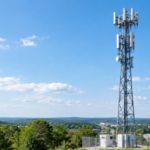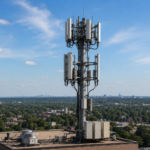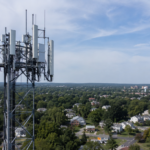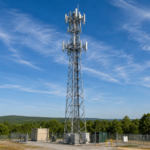

Most property owners don’t realize a cell tower lease renewal is one of the highest-stakes financial negotiations they’ll ever face — and most of them walk into it completely unprepared. The result? Thousands, sometimes tens of thousands of dollars left on the table, locked into contract terms that favor the tower company for the next 20 to 30 years.
The three mistakes covered in this guide are among the most common — and the most costly — that property owners make during cell tower lease renewals. If you’re approaching a renewal, being contacted by a tower company, or simply want to understand what’s at stake, read every word.
Key Takeaways
- Negotiate for future growth. Always push for a revenue-sharing clause so you can benefit when additional carriers are added to the tower.
- Protect your escalation rates. Annual or renewal-term increases have a major impact on long-term lease value and income.
- Review ROFR clauses carefully. Right of First Refusal provisions can limit your options and reduce flexibility if you decide to sell.
- Think beyond the renewal. The terms you negotiate today can significantly affect the future buyout value of your cell tower lease.
- Recognize your leverage. Tower companies seek long-term lease certainty to support expansion and attract new tenants, giving property owners negotiating power.
- Get specialized guidance. Experienced cell tower lease consultants can help maximize financial returns and identify risks that may otherwise be overlooked.
Why Cell Tower Renewals Are a Hidden Financial Minefield
A cell tower lease renewal sounds routine — you’ve had a working relationship with the tower company for years, the payments have come in on time, and they’re simply asking you to continue. What could go wrong?
Quite a lot, actually.
What the tower company is doing at renewal is locking in the financial terms that will govern your site for the next 5, 10, 15, or 30 years. They’ve run projections. They know which carriers are likely to add equipment to your tower. They’ve modeled how much revenue your site will generate under various scenarios. And they’re offering you a renewal structured to minimize how much of that future value flows to you.
The three mistakes below aren’t hypothetical. They’re patterns seen repeatedly in cell tower lease renewal negotiations across the country — and each one represents a predictable, avoidable loss.
Mistake #1: Failing to Negotiate a Revenue Share Clause
What It Is
A revenue share clause entitles the property owner to a percentage of the income the tower company earns from additional tenants — meaning carriers beyond the first one — who place equipment on your tower.
Why Tower Companies Hate It
Here’s the business reality: carriers often avoid towers with leases nearing expiration. An expiring lease creates uncertainty — will the site stay operational? Will terms change? Rather than risk a disruption to their network, carriers frequently delay adding equipment to towers in this situation.
When a tower company comes to you for a renewal, one of their primary goals is to eliminate that uncertainty so they can actively market the tower to new tenants. Once the lease is renewed on favorable (to them) terms, they can pursue additional carrier revenue without obligation to share it. However, if revenue share exists from a renewal, it can usually be passed on to the carriers.
A revenue share clause changes that math entirely. If a second or third carrier adds equipment after renewal, you participate in that income — not just the base rent.
Why Most Owners Don’t Have One
Tower companies don’t volunteer this clause. It’s rarely in their template renewal documents. And because most property owners aren’t working with a consultant who knows to ask for it, it simply never gets negotiated. You can read more about how revenue share compares to tenant count in a dedicated breakdown on the JP Tower Consulting blog.
What to Do
Make revenue share a non-negotiable item in your renewal discussion. Even a modest percentage of co-location revenue on an active tower can meaningfully increase your annual income — and add significant value to any future lease buyout.
Mistake #2: Accepting a Weak Escalation Structure
The Escalation Clause Is Your Long-Term Financial Foundation
Your rent escalation structure determines how your income grows over the life of the lease. It’s not a minor detail — it’s one of the most financially significant provisions in the entire agreement, and it compounds over decades.
Many older leases were written with escalation structures that were genuinely favorable to landowners: 3% or 4% annual increases, structured to provide meaningful rent growth over time. These older escalation rates were a product of a more competitive era in cell tower development.
Tower companies today know that those older structures cut into their margins as their own carrier lease rates have escalated faster. When renewal time comes, one of their quiet objectives is to reset your escalation to something more favorable to them — often a 7.5% or 10% per term increase that may deliver less future upside.
Why This Matters More Than Most Owners Realize
Consider two scenarios on a lease with $2,000/month base rent:
- Scenario A: 3% annual escalation — after 10 years, monthly rent is approximately $2,688
- Scenario B: 15% per 5-year term — after 10 years, monthly rent is approximately $2,645, but the step-increases create compounding value differently over longer terms, and the per-term structure can affect buyout multiples
The numbers aren’t identical, but the real risk is when owners unknowingly accept lower escalation than they had before — trading a 15% per-term structure for a 3% annual one without realizing the long-term impact.
For a detailed look at term escalators versus annual escalators and how each structure affects your lease value, that comparison is worth reviewing before entering any renewal negotiation.
What to Do
Know your current escalation structure before the conversation starts. At a minimum, fight to preserve what you have. With professional guidance, you may be able to improve it. Any reduction should be treated as a red flag — and compensated for significantly in base rent before you agree.
Mistake #3: Blindly Accepting a Right of First Refusal
What a ROFR Actually Does
A Right of First Refusal (ROFR) clause gives the tower company — or whoever holds the clause — the right to match any third-party offer you receive before you can sell your lease income stream to an outside buyer.
On the surface, this sounds neutral. In practice, it introduces friction, uncertainty, and potential suppression of competitive offers whenever you try to sell. Also, the cell tower company may have no reason to bid against itself with a ROFR already in their contract.
Why ROFR Hurts More Than It Helps (for Most Owners)
Here’s the problem: when prospective buyers know a ROFR exists, some will decline to submit competitive offers because they know the tower company can simply match and take the deal. The incentive to aggressively bid — which is exactly what drives your sale price up — is dampened.
The result? A ROFR can structurally reduce the competitive tension that produces premium buyout pricing. For property owners who may want to sell within five to ten years of renewal (which, as we’ll cover below, describes most of them), this is a real financial disadvantage.
For a deeper dive into how ROFR clauses affect your negotiating position, the Right of First Refusal guide and the ROFR negotiation strategy page both cover this in detail.
When ROFR Might Be Acceptable
The standard isn’t that ROFR is always bad — it’s that you should only accept it when the financial terms of the overall renewal are clearly in your favor. A ROFR that comes with a materially higher base rent, improved escalation, and a revenue share clause might represent a fair trade. A ROFR tacked onto an otherwise mediocre offer is simply a way to control your asset without paying you for that control.
What to Do
Push to remove the ROFR clause entirely unless you receive clear financial compensation. If the tower company insists on it, treat it as a negotiating chip — something that has value to them, and should therefore cost them something in the form of better terms for you.
The Renewal-to-Buyout Connection Most Owners Miss
Here’s a pattern worth understanding: most property owners sell their cell tower lease income stream within five years of signing a renewal.
Why does that matter? Because the terms of your renewal directly determine the value of your future buyout.
A lease with a strong escalation clause, a revenue share provision, and no ROFR clause is worth considerably more to a buyer than a flat lease with a ROFR attached. The difference can easily be tens of thousands of dollars in lump-sum sale proceeds.
This means the renewal negotiation isn’t just about the next few years of monthly income. It’s about optimizing a financial asset that you may convert to a lump sum relatively soon. Understanding how your lease is valued in a buyout is essential context for anyone approaching renewal.
A good consultant will walk you through the post-renewal value of your lease — not just the monthly payment — so you’re making a fully informed decision. Understanding the difference between a lease buyout and monthly rent is key to seeing the full financial picture.
Why the Tower Company Needs This Renewal More Than You Realize
One of the most important mindset shifts for property owners entering renewal negotiations: the tower company has at least as much at stake as you do — probably more.
Consider their position. They cannot move the tower. The carriers paying rent on that infrastructure expect operational continuity. New carrier additions — the ones that generate the co-location revenue they don’t want to share with you — require a stabilized, long-term lease.
An expiring lease creates uncertainty that actively hurts their business. They need your renewal to manage that uncertainty and to position the site for future growth.
That leverage is real, and most property owners never use it. If you want to understand how to negotiate a cell tower contract from a position of strength, the principles are exactly the same as in any negotiation: understand what the other party needs, and price your cooperation accordingly.
What a Good Consultant Actually Does for You
Hiring a cell tower lease consultant isn’t just about having someone review a document. A qualified consultant brings:
Market knowledge you don’t have access to. They know what escalation structures are reasonable to demand, and what lease terms other property owners have successfully negotiated.
Negotiating credibility. When a consultant is at the table, the tower company knows they’re dealing with someone who understands the numbers. That changes the dynamic of the conversation.
Legal and financial protection. The mistakes in this guide — missed revenue share, weakened escalation, ill-considered ROFR clauses — are exactly what a good consultant catches before you sign. An attorney who isn’t cell-tower-specific may miss industry-specific provisions that have major financial implications.
Post-renewal valuation. A knowledgeable consultant will tell you what your lease is worth after renewal — information that’s essential if you’re considering a future sale.
For more on why hiring a consultant pays for itself, and on how to find a good cell tower consultant, those resources cover the selection criteria and what to look for in detail. You can also explore JP Tower Consulting’s full range of services to understand what professional representation looks like.
Red Flags That Your Renewal Offer Is Undervalued
Watch for these warning signs in any renewal proposal:
No revenue share offered, and no explanation of why If the tower company doesn’t address co-location revenue at all, that’s a signal — not an oversight.
Escalation lower than your current structure Any offer that reduces your escalation rate should be treated as a negotiating tactic, not a reasonable starting point.
A ROFR clause presented as “standard” It may be common in their templates. That doesn’t mean it’s in your interest.
Urgency pressure If they need an answer quickly, they need the renewal more than they’re letting on. Slow down, not speed up.
The offer arrives without any explanation of what changed from your current lease A legitimate renewal offer should be easy to compare line-by-line against your existing terms. If it isn’t, ask why.
No mention of rent reduction risk Tower companies have been known to send rent reduction letters as negotiating pressure. Understanding this tactic in advance protects you from being intimidated into accepting unfavorable terms.
Frequently Asked Questions
Q: How far in advance should I start preparing for a cell tower lease renewal?
Ideally, 12 to 18 months before the renewal date. That gives you time to understand your current terms, identify a consultant, obtain an independent valuation, and negotiate from a non-pressured position. Waiting until the tower company contacts you puts them in control of the timeline.
Q: What if my current lease has a flat rent with no escalation at all?
This is unfortunately common in older leases. Renewal is your opportunity to correct it. A minimum of 3% annual escalation should be a baseline demand; with professional representation, higher structures are achievable depending on your site’s characteristics.
Q: Can I negotiate a revenue share clause even if it wasn’t in my original lease?
Yes. Renewal is a new negotiation, not just an extension. Provisions that didn’t exist in the original lease can be introduced. This is one of the primary reasons to work with a consultant — they know which provisions are realistic to request and how to frame them.
Q: What happens if I don’t renew and let the lease expire?
This creates maximum leverage but also maximum complexity. Tower companies facing imminent lease expiration are motivated — but the negotiation becomes more contentious. If you’re approaching expiration without having started renewal discussions, getting professional guidance immediately is the right move. See also: what happens with a single-tenant cell tower lease expiring in 5 years.
Q: Is a cell tower lease renewal the same as a new lease negotiation?
They share many of the same principles, but renewals have unique dynamics — you’re negotiating from an existing relationship, with an existing income structure, and with more knowledge about the site’s performance. The strategies covered in new lease negotiation provide useful context, but renewal-specific guidance is important.
Q: Will a consultant really make a financial difference?
In most cases, yes — measurably so. The combination of improved escalation, added revenue share, and ROFR removal can collectively add significant present and future value to your lease. The consultant fee is almost always smaller than the financial improvement achieved. You can request a free cell tower lease evaluation to understand what your current situation is worth before committing to anything.
Final Thoughts: Don’t Negotiate Blind
Cell tower lease renewals are not routine paperwork. They are high-stakes, multi-decade financial negotiations in which one party — the tower company — has every structural advantage: legal teams, financial models, industry expertise, and years of experience negotiating with uninformed property owners.
The three mistakes in this guide — missing revenue share, accepting weak escalation, and blindly agreeing to ROFR — are each individually costly. Together, they can represent a six-figure difference over the life of the lease and in any eventual buyout.
The good news is that none of this requires you to become an expert. It requires you to recognize that you need one — and to engage professional representation before you sign anything.
If you’re approaching a renewal, have already been contacted by a tower company, or simply want to understand what your lease is worth today, the right first step is a professional evaluation. Request a free cell tower lease evaluation or contact the JP Tower Consulting team directly to get an honest assessment of where you stand.
Knowledge is leverage. Use it.
This blog is for educational purposes and does not constitute legal or financial advice. Every lease situation is unique. Consult a qualified cell tower lease consultant, attorney, or financial advisor before making decisions about your lease.