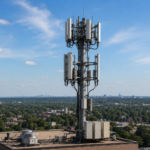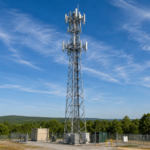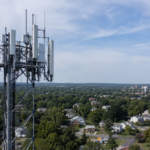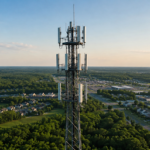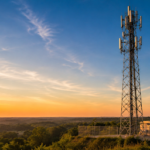
Yes — if your rooftop cellular lease sits in a high-traffic urban or suburban area, it’s probably worth far more than your current rent suggests. Carriers frequently have no realistic alternative site nearby, thanks to zoning limits, structural constraints, and the sheer difficulty of permitting new construction. That scarcity hands property owners real leverage, especially as a lease nears expiration. Below, we break down why rooftop cellular leases hold so much value, what rooftop lease buyout multiples look like right now, and how to negotiate before you sign anything away.
Key Takeaways
- Rooftop cellular leases in dense, high-traffic areas carry outsized leverage because carriers often can’t legally or physically build a new site nearby.
- Never agree to a rent reduction as your lease nears expiration — that’s exactly when your leverage is highest.
- Rooftop lease buyouts are currently trending between 17–23x annual rent. The higher your rent, the higher your potential buyout.
- Negotiate a rent increase before considering a buyout. Buyout companies have ongoing relationships with carriers and little incentive to raise rent on them. So their buyout offers will be lacking.
- Work with an independent expert, not the carrier’s team or the buyer’s team, to protect your long-term income.
Why High-Traffic Rooftop Cellular Leases Hold So Much Leverage
Site Scarcity: Why Carriers Can’t Just Build Elsewhere
In dense areas, a rooftop is often the only practical spot for a carrier’s equipment. Building a brand-new tower nearby is rarely simple. According to the Federal Communications Commission, any new tower construction requires local zoning approval, environmental review under the National Environmental Policy Act, historic preservation review under the National Historic Preservation Act, and often FAA notification and Antenna Structure Registration.
That’s a long, expensive process — and it’s precisely why carriers lean so heavily on existing rooftops instead of starting from scratch.
The FCC has also long encouraged collocation on existing structures over new builds, in part to reduce visual and environmental impact. In practice, that federal preference for collocation reinforces just how valuable an existing, already-approved rooftop site becomes to a carrier that needs coverage in a specific location.
Coverage Dependency in Dense Networks
Carriers design their networks around precise coverage zones. If your rooftop drops out of their network, they may create a coverage gap that’s difficult — sometimes impossible — for a competitor’s nearby site to fill. That dependency is leverage you can use.
Signs Your Rooftop Lease Has Real Negotiating Power
Location-Based Indicators
- Your building sits in a dense urban core or high-traffic commercial corridor
- Nearby rooftops of similar height and structure are limited or unavailable
- Local zoning restricts new tower construction or monopole installations
Lease Timing Indicators
- Your lease is approaching its renewal or expiration date
- There’s no automatic renewal clause locking you into old terms
- The carrier is actively densifying its network nearby (5G buildout, DAS expansion, small cell additions)
If several of these apply to your property, you likely have far more leverage than the carrier wants you to realize.
Why Carriers Push for Rent Reductions Near Expiration
The Carrier Playbook: Testing Owner Awareness
As a lease nears its end, many carriers open with a request to lower your rent — not raise it. This isn’t a coincidence. Carriers know most property owners don’t track market rates or understand their own leverage, so a modest ask can quietly slip through unnoticed. Carriers will use “market rate assumptions” nearby to entice you to take less.
Why You Should Never Agree to a Rent Cut on a Valuable Site
If your rooftop is genuinely hard to replace, a rent reduction request is a signal, not a threat. It usually means the carrier needs the site badly enough to negotiate — which is exactly the moment to push for a rent increase, not accept a cut. If a dispute arises during this process, our dispute resolution services can help protect your position and your income.
Rooftop Lease Buyout Explained: What 17–23x Annual Rent Means
How Buyout Multiples Are Calculated
A rooftop lease buyout is a lump-sum payment a company offers in exchange for your future lease income. Buyout firms calculate their offer as a multiple of your current annual rent. Right now, rooftop lease buyouts are trending in the range of 17 to 23 times annual rent.
Why Higher Rent Equals Higher Buyout Potential
This is the part most owners miss: the multiple is applied to whatever your rent is at the time of sale. A lease paying $24,000 a year at a 20x multiple nets $480,000. The same lease at $30,000 a year — after a successful renewal negotiation — nets $600,000 at the same multiple. Raising your rent first isn’t a small detail; it can be worth six figures.
Current Rooftop Lease Buyout Trends
Buyout activity has picked up as more property owners near expiration on long-held rooftop leases in high-traffic locations. If you’re weighing a sale, our full breakdown on how to sell your cell tower lease for maximum value walks through the process step by step.
Should You Negotiate a Rent Increase Before Selling Your Lease?
Why Lease-Buyout Companies Avoid Raising Rent With Carriers
Lease-buyout companies work with carriers repeatedly, across many deals. That relationship creates a built-in conflict of interest: pushing hard for a rent increase on your behalf could strain the buyout company’s own standing with the carrier for future business. They’re generally not motivated to fight for your best rent — they’re motivated to close the deal. The lease buyout companies won’t get the renewal terms that I get for fear of not getting new business out of the carriers. Most of these companies that buy leases also build towers which is why they are focused on the long term relationship with the carriers.
The Right Sequence: Increase Rent First, Then Evaluate a Buyout
Selling before maximizing your rent can mean leaving significant money on the table. The smarter sequence is: negotiate the largest rent increase available first, then decide whether a buyout makes sense at the new, higher rent. Skipping step one shortchanges you at step two.
How JP Tower Consulting Helps Property Owners Maximize Rooftop Lease Value
Rooftop lease negotiations are rarely straightforward, and carriers count on property owners not knowing the market. With over 60+ years of combined industry experience, JP Tower Consulting works exclusively for property owners — not carriers, not buyout firms — to make sure you understand your leverage before you sign anything.
Our team handles rooftop colocation strategy, lease renewal negotiations, and full lease buyout evaluations, so you have a clear picture of what your site is really worth before you make a decision.
If your lease is approaching expiration, start with a free rooftop lease evaluation to understand your options.
Steps to Take Before Your Rooftop Lease Expires
Timeline Checklist
- 12 months out: Review your current lease terms and note the expiration or renewal date. Market rents don’t matter at this stage as every negotiation is different.
- 6 months out: Begin gathering documentation and consult an independent expert before any carrier outreach.
- 3 months out: Enter negotiations with a clear rent target and a documented understanding of your leverage.
Documents to Gather Before Negotiating
- Your current lease agreement and any amendments
- Rent payment history
- Any prior correspondence from the carrier about renewal or rate changes
For a deeper look at negotiation timing, see our post on cell tower lease renewal: what to do first.
Frequently Asked Questions
How much is a rooftop cellular lease buyout worth?
Rooftop lease buyouts are currently trending between 17 and 23 times your annual rent. The exact multiple depends on your location, the carrier’s dependency on the site, and current market demand for that type of lease.
Should I sell my rooftop cell tower lease or renew it?
It depends on your financial goals. A buyout provides immediate cash, while renewing keeps ongoing income and may allow further rent increases over time. Many owners find it’s best to negotiate a rent increase first, then compare both options with current numbers in hand.
Can a carrier reduce my rooftop lease rent at renewal?
Carriers can ask, but that doesn’t mean you have to agree. If your site is hard to replace, a rent-reduction request is often a sign of your leverage, not a sign you should concede.
What makes a rooftop lease more valuable than a ground lease?
Rooftop sites in dense, high-traffic areas are often harder for carriers to replace than ground-based sites, since suitable rooftops nearby may be limited or nonexistent. That scarcity tends to support stronger rent and buyout terms.
How do I know if my rooftop site has negotiating leverage?
Look at location density, the availability of comparable nearby rooftops, local zoning restrictions on new towers, and how close your lease is to expiration. A property owner working with an experienced negotiator can assess this more precisely.
Conclusion
A rooftop cellular lease in a high-traffic location isn’t just steady income — it can be one of the most valuable assets tied to your property. The leverage is real, but it only works in your favor if you use it before you sign a renewal, agree to a rent cut, or accept a buyout offer. Negotiate the rent increase first, understand your buyout multiple, and get an independent expert in your corner before the carrier — or a buyout company — sets the terms for you.
Ready to find out what your rooftop lease is really worth? Get a free rooftop lease evaluation from JP Tower Consulting today.