Key Takeaways
- Carriers are pushing hard for cell tower rent reductions, and smaller property owners are taking most of the pressure.
- Many rent-reduction requests come from carrier vendors, not the carrier directly.
- If another tower sits within a quarter mile of yours, your rent may be at risk.
- Older towers built in the late 1990s or early 2000s can carry carrier rents above $5,000 per month. A move to a nearby tower could reset that to around $2,000.
- Carriers have spent six figures to move off a high-rent site, which shows how much they expect to save.
- If your tower has only one tenant and that tenant leaves, the tower could become a takedown candidate.
- JP Tower Consulting helps property owners respond to rent cuts before they agree to anything.
Are Carriers Really Moving to Cut Cell Tower Rent?
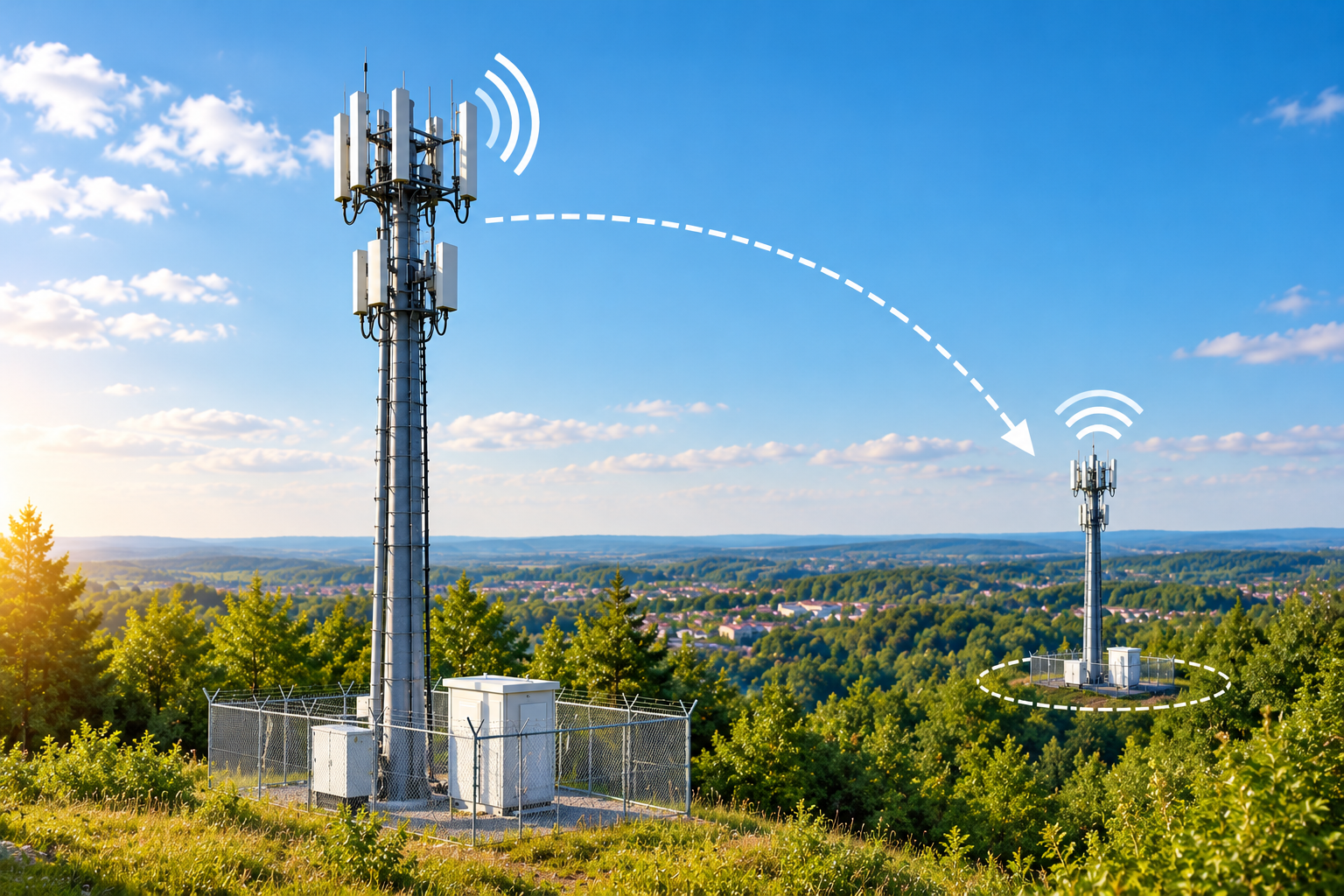
Yes. Carriers are actively looking for ways to lower site costs, and moving to a cheaper nearby tower is one of them. If your site carries high rent and another tower stands within about a quarter mile, a carrier may leave or use that option to push your rent down.
Some carriers are also willing to lower antenna height on other nearby towers to avoid high rent. Don’t answer a rent-reduction request until you know what’s around your site. JP Tower Consulting helps owners assess that risk and negotiate from a position of knowledge.
Why Carriers Are Pushing Cell Tower Rent Reductions Now
Carriers have always watched costs. What’s different now is how aggressive they’ve become. Property owners across the country are getting rent-reduction letters, and the pace has picked up.
The pressure isn’t landing evenly. Carriers still pay large rents to the big tower companies, and those deals are hard to change. So the cost cutting moves to the easier target: mom-and-pop landlords who own a single site and don’t negotiate leases for a living.
Who Gets Squeezed
| Party | Negotiating Power | What Happens to Their Rent |
| Large tower companies | High, backed by national contracts | Mostly protected |
| Wireless carriers | High, controls where equipment goes | Looking to cut site costs |
| Individual property owners | Low, unless they know their leverage | Main target for reductions |
What a Rent-Reduction Request Looks Like
Most requests don’t come from the carrier itself. They come from a vendor hired to manage the carrier’s site costs. The letter or call usually says the carrier needs to “optimize” the site or that rents in the area have changed. Sometimes it hints that the carrier may leave. A cell tower rent reduction request is a negotiation opening, not a final decision.
The Quarter-Mile Rule: When a Nearby Tower Puts Your Rent at Risk
If you can see another tower within a quarter mile of your site, be careful. That tower is your competition. A carrier that can get similar coverage from a nearby structure has a real alternative to paying your rent.
Think of it like a gas station on a corner. If there’s no other station for miles, drivers pay what you charge. If a cheaper station opens across the street, your prices are suddenly up for debate.
| Factor | Lower Risk | Higher Risk |
| Nearest other tower | Far away or none | Within a quarter mile |
| Tower age | Newer build | Built in the late 1990s or early 2000s |
| Current carrier rent | Modest | Above $5,000 per month |
| Number of tenants | Several carriers | One carrier |
| Space on nearby tower | Full | Room for new equipment |
Carriers already know how to threaten to move a cell tower to win concessions. A nearby tower makes that threat believable.
How a Cell Tower Rent Reset Works
A rent reset happens when a carrier leaves a high-rent site and signs onto a nearby tower at a lower rate. For older sites, the gap can be large.
| Older High-Rent Site | Nearby Competing Tower | |
| Typical build era | Late 1990s or early 2000s | Varies |
| Possible carrier rent | Can exceed $5,000 per month | Could reset to around $2,000 per month |
| What the carrier gains | Nothing new | Lower monthly cost for years |
| What the property owner loses | A tenant and its rent | Nothing |
A Real Example: Verizon Moved to a Competing Tower
On one site our team worked on, Verizon left one tower and moved to a competing tower on the same parcel. Verizon wanted the move badly enough to make a six-figure capital contribution to extend the other tower height. When a carrier is willing to spend more than $100,000 to relocate, the rent savings must be significant.
Lowering the Rad Center to Avoid Rent
On another Verizon site, the carrier is willing to lower its rad center, the height where its antennas sit on a tower next, to avoid paying the high monthly rent. Lower antennas can mean weaker long range coverage, so this shows how far carriers will go to cut costs.
Single-Tenant Towers and Takedown Risk
If your tower has only one tenant, the stakes are higher. When that tenant leaves, the tower may earn nothing. At that point it can become a takedown candidate, and your lease income can disappear.
A single-tenant cell tower lease can still carry real value, but only if you understand the risk and protect it early.
How Master Lease Agreements Shape Carrier Behavior
Carriers sign master lease agreements (MLAs) with the large tower companies. These deals set rent and terms across thousands of sites. Over the past few decades, tower companies negotiated very favorable economics in these agreements.
Carriers are pushing back, especially when major MLAs come up for renegotiation. When they can’t cut costs inside an MLA, they look elsewhere. That often means individual ground leases and owner-operated towers.
What Federal Rules Mean for Carrier Moves
Federal law makes it easier for carriers to add equipment to existing towers. Under Section 6409(a) of the Spectrum Act (47 U.S.C. 1455), local governments may not deny certain requests to modify an existing tower or base station when the change doesn’t substantially alter its size. In practice, that can make collocating on a nearby existing tower faster than building something new.
You can check what’s near you using the FCC Antenna Structure Registration search. It lets you look up registered towers by location. Shorter towers may not be registered, so a drive around your area is still worth doing.
How to Protect Your Cell Tower Lease Value
- Map the towers around you. Look for any structure within a quarter mile.
- Know who’s on your tower. Confirm every carrier and how long each has been there.
- Don’t answer a vendor letter right away. A quick reply can weaken your position.
- Review your termination clause. Many leases let the tenant leave with notice.
- Get your lease valued. Know what your site is worth before you discuss any cut.
- Negotiate with the full picture. Your options may include a cell tower lease renewal on better terms or a cell tower lease buyout while the income is still in place.
Your Options When a Rent Cut Request Arrives
| Option | When It Fits | Watch Out For |
| Negotiate the request | Carrier has few real alternatives | Giving up rent you didn’t need to |
| Trade rent for better terms | Carrier needs the site long term | One-sided termination rights |
| Sell the lease | Risk of tenant loss is high | Selling below true value |
| Push back firmly | No nearby tower can take the equipment | Misjudging the carrier’s options |
If talks turn hostile or stall, a dispute resolution strategy can help protect your income.
Know the Landscape Before a Carrier Makes Its Move
Carriers are working hard to lower site costs, and smaller property owners are feeling it most. A nearby tower, an older high-rent lease, or a single tenant can all put your income at risk.
The owners who protect their value are the ones who know their surroundings before the call comes. Look at the towers near you, understand your lease, and don’t let a vendor set the terms.
Why Owners Facing Rent Cuts Call JP Tower Consulting
Most property owners see one rent-reduction request in their lifetime. The vendors sending them handle hundreds. That’s a hard gap to close alone.
JP Tower Consulting represents property owners only. We look at your lease, your tenants, and the towers around your site, then help you decide whether to negotiate, push back, or sell. Our team has worked on carrier relocations firsthand, so we know what these moves cost and how much leverage you really have.
If you’ve received a rent-reduction request or can see another tower from your site, request a free cell tower lease evaluation before you respond.
FAQs
Why are carriers asking to reduce my cell tower rent?
Carriers are cutting site costs across the country. Since their large tower company contracts are hard to change, they often target individual property owners first.
Can a carrier leave my tower before the lease ends?
Often, yes. Many cell tower leases let the tenant terminate with notice. Check your lease to see what notice period and conditions apply.
How do I find out if there’s another tower near my property?
Start with the FCC Antenna Structure Registration search, which shows registered towers by location. Then check your area in person, since shorter towers may not be listed.
What happens if my only tenant leaves the tower?
If you have a base rent, it usually will continue, but if it’s tied to a revenue share, it will go to zero. A tower with no tenants may also become a takedown candidate thus any base rent could be at risk.
Should I accept a cell tower rent reduction request?
Not without a review. The request is a starting point. Your nearby tower landscape, your tenants, and your lease terms decide how much leverage you have.